At Lloyds British, we often come across businesses that are unsure whether the LOLER regulations apply to their equipment and operations, and exactly what their responsibilities are.
This can lead to a number of serious non-compliance issues, safety failures and even legal ramifications. This uncertainty can leave gaps in inspection records, increase safety risks and potentially result in a failure to meet legal responsibilities.
In this article, we explain who LOLER applies to, what equipment may be covered and the key responsibilities businesses need to understand.
LOLER only applies to work activities, such as:
- A crane on hire used at a construction site
- Contract lift
- Passenger lifts provided for the use of workers in an office block
- Refuse collection vehicles
- Patient hoists
- Forklift trucks
Who is responsible under LOLER?
LOLER places duties on employers, self employed people and anyone who owns, provides or has control over lifting equipment used at work.
This includes businesses whose employees use lifting equipment, regardless of whether the equipment is owned, leased or hired.
The dutyholder may therefore be:
-
An employer providing lifting equipment for employees to use
-
A business controlling lifting equipment or lifting operations on a site
-
A self employed person using lifting equipment as part of their work
-
A company providing lifting equipment for use by another business
The exact responsibilities will depend on who controls the equipment and how it is being used. Responsibilities should be clearly understood where equipment is hired or more than one business is involved in a lifting operation.
What equipment does LOLER cover?
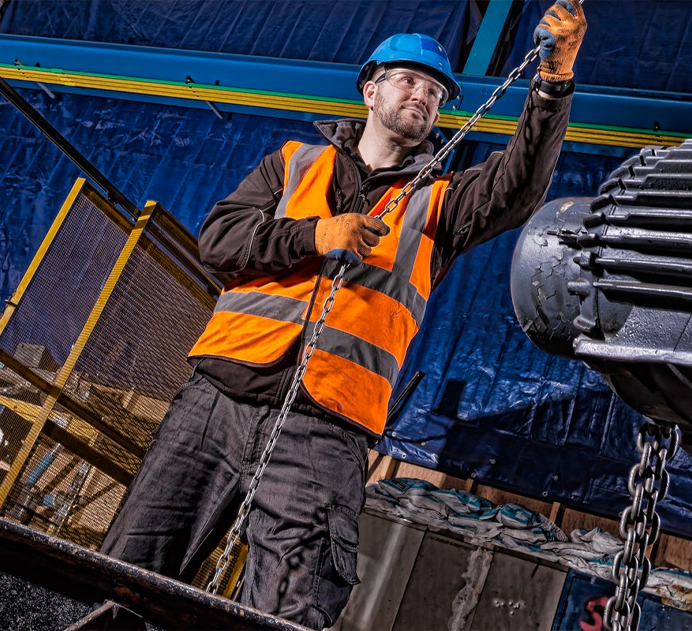
LOLER applies to work equipment used for lifting or lowering a load, including the accessories used to support, attach or anchor that load.
Examples can include:
-
Overhead cranes and lifting beams
-
Forklift trucks and telehandlers
-
Vehicle tail lifts and vehicle mounted cranes
-
Goods lifts and passenger lifts used in workplaces
-
Patient hoists
-
Lifting chains, slings, hooks and eyebolts
-
Mobile elevating work platforms
LOLER applies across a wide range of sectors wherever lifting equipment is used as part of a work activity.
What are the main responsibilities under LOLER?
Where LOLER applies, lifting equipment and lifting operations must be managed properly to reduce risk and protect anyone who may be affected.
Dutyholders must ensure that:
-
Lifting equipment is suitable for its intended purpose
-
Equipment is positioned and installed safely
-
Safe working loads are clearly marked where required
-
Lifting operations are properly planned by a competent person
-
Operations are appropriately supervised and carried out safely
-
Equipment is thoroughly examined by a competent person at the required intervals
-
Thorough examination reports and relevant records are retained
Any defects that present, or could present, a danger to people must be acted upon within the timeframe stated in the thorough examination report. Equipment with a serious defect must not continue to be used until the risk has been addressed.
How does LOLER work alongside PUWER?
Most lifting equipment is also classed as work equipment. This means the Provision and Use of Work Equipment Regulations 1998, known as PUWER, will usually apply alongside LOLER.
PUWER covers the wider safety, suitability, maintenance and use of work equipment. LOLER adds specific requirements for lifting equipment and lifting operations, including planning, supervision and thorough examination.
A thorough examination under LOLER is not the same as routine maintenance, servicing or an operator check. Businesses need to ensure that each requirement is managed correctly.
Supporting your LOLER compliance
Managing different equipment types, examination dates, certificates and defects can quickly become complex, particularly across multiple sites.
Lloyds British can support you with competent, independent thorough examinations and clear reporting, helping you understand what is compliant, what requires attention and what is due next.
Inspection records and certificates can also be accessed digitally through Motion Kinetic, providing greater visibility and control across your assets.
Speak to Lloyds British about reviewing your lifting equipment and compliance requirements.